Why Converting to a Headless CMS pays off

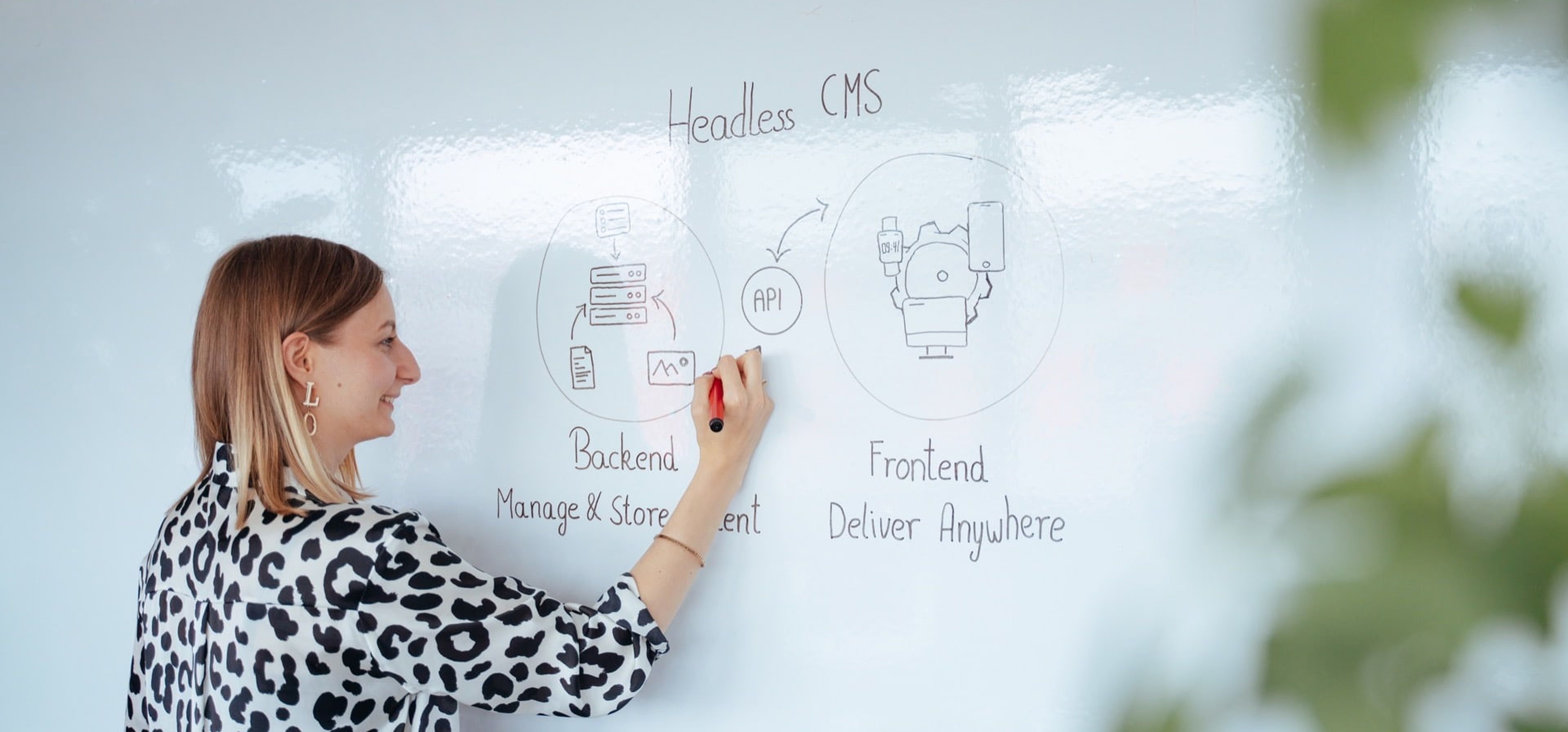
Ergosign Mitarbeiterin macht ein Scribbel am Whiteboard zur Headless CMS Funktion.
Alina Dier
Alina DierAuthor
Christian Grasmueck
Christian GrasmückAuthor
Reading time
6 Minutes
Published
27. März 2024
Topics
Headless CMS, DXP, Accessibility, Operate

The Future is Headless: Why Headless CMS is the Foundation of Modern Digital Experience Platforms.

For marketers, the future is 'headless'—at least when it comes to building a Digital Experience Platform (DXP). The foundation for this is the selection of a suitable Headless Content Management System (CMS). Such a system offers companies the opportunity to create seamless and personalized experiences across various digital channels—such as mobile apps, websites, or social media. As part of a content series, we use the example of our long-standing client, Stadtwerke Düsseldorf, to show what matters for a successful website migration.

In the first part, we answer why switching to a Headless CMS is worthwhile and which aspects must be considered for a successful content migration.

Ergosign has been designing digital services with outstanding customer experience for Stadtwerke Düsseldorf for several years (read more about the successful collaboration here). Currently, our team is working on expanding the web platform into a Digital Experience Platform (DXP) to ensure a personalized customer experience across all digital touchpoints. This process involves migrating to a new CMS.

Excursus: Not all CMS are created equal

Headless vs. traditional CMS

A Content Management System is used to create and manage digital content (in text, image, video, or other forms). Different types of CMS can be distinguished:

The traditional CMS (Monolith) is an all-in-one solution where the frontend and backend are tightly coupled. The integration of design and content within a single system ensures ease of use and rapid website implementation. However, since the frontend technology is always predefined, design options can be restrictive, especially in more complex projects.

A Headless CMS, on the other hand, decouples the frontend and backend. This allows developers and editors to manage content independently of its presentation and deliver it via APIs. This approach offers high flexibility and adaptability.

Transform your Brand Through a Digital Experience Platform

Learn how the Stadtwerke Düsseldorf took the next step on their journey

Why Headless? The Benefits at a Glance:

  • Omnichannel presence and consistent brand experience

  • Flexibility and scalability

  • Time savings and increased productivity

  • Improved website performance

  • Technological independence

  • Faster launch (Time-to-Market)

Stadtwerke Düsseldorf decided to switch from a monolithic CMS to a Headless CMS. By decoupling the frontend and backend within the Headless CMS, numerous advantages arise for the online marketing team, sales, and customer service:

Since content is stored in a neutral format and provided via an API, it can be managed centrally for various platforms, devices, technologies, as well as iOS and Android apps—making a seamless omnichannel presence with a consistent brand experience easy to achieve! At Stadtwerke Düsseldorf, for example, content for both the website and the app can be maintained within a single CMS in the future. This ensures greater flexibility and scalability, saves time, and boosts editorial productivity. All these advantages also have a positive impact on the time-to-market. In addition to better usability, a headless CMS offers more powerful website performance, which can have a positive effect on SEO rankings.

Stadtwerke Düsseldorf chose the headless CMS Storyblok. Beyond its high usability, Storyblok impresses with its Visual Editor, which makes backend editing faster and more intuitive. Senior Software Engineer Maximilian Stolz is also a fan: 'With Storyblok, we aren't tied to a specific technology stack. Thanks to the flexibility of the CMS, a tech stack tailored exactly to the customer's needs can be defined. This results in truly bespoke DXPs that lead to an improved experience for customers, editors, and employees alike.'

Does Storyblok not fit your requirements? No problem—we will guide you through the decision-making process and are, of course, open to other providers.

Before the Content Migration

New Technology Stack, Clear Responsibilities and Content Audit

Before starting the migration, it is essential to define the new technology stack (or 'tech stack'). Since Storyblok offers a wide range of framework options, we chose React—a framework that the Stadtwerke Düsseldorf team was already familiar with.

A CMS migration always presents an opportunity to conduct a content audit to identify outdated material, revise existing content, or optimize for SEO. Deciding which content actually makes the move is a crucial step in this process and should never be overlooked.

Stadtwerke Düsseldorf also conducted an analysis of their existing content. Due to the sheer volume of the website and the diverse range of topics—covering electricity, water, gas, and heating—we decided against a fully automated migration. Instead, we opted to migrate the content in phases.

To maintain a clear overview throughout, we defined responsibilities early on and created a breakdown of the various content areas to be migrated. This allowed us to visualize manageable work packages, including intermediate steps and review processes, in a dashboard for the migration team—ensuring the project's progress was visible at all times.

Advantages of Manual Content Migration

A key success factor in the Stadtwerke Düsseldorf migration project was breaking down the content into smaller, manageable packages. The advantages of this approach are clear: a phased migration allows for the adjustment and optimization of content throughout the process while also conserving team resources. At the same time, it makes it possible to track migration progress specifically and react flexibly to any challenges that may arise.

Best Practices for Successfully Migrating Content

Uncertainty and perhaps even anxiety regarding a major migration are not uncommon and are completely understandable. To alleviate any concerns about manual migration within the Stadtwerke Düsseldorf team, we prioritized both on-site and online training sessions, along with continuous support. This ensured the team felt supported throughout the entire process and possessed the necessary skills and knowledge for a successful content migration. Of course, our team didn't just provide training and consulting; we also actively assisted with the content migration whenever needed.

Pre-migration Checklist: What Preparation is Needed for a Successful Migration?

  1. Wählen Sie das neue Headless CMS aus

    Machen Sie sich Ihre Anforderungen an ein CMS bewusst und wählen Sie auf dieser Basis das passende CMS aus. Wir begleiten Sie gerne durch den Entscheidungsprozess!

  2. Wählen Sie das neue Tech Stack aus

    Erstellen Sie gemeinsam mit den Entwickler:innen eine Liste mit Kriterien und Funktionen, die implementiert werden sollen. Wählen Sie einen Tech Stack aus, der zu ihren Anforderungen passt.

  3. Definieren Sie Verantwortlichkeiten

    Klären Sie bereits vor der Migration die Rollen und Verantwortlichkeiten aller Beteiligten. Vorab formulierte Ziele und Fristen helfen, den Erfolg der Migration zu kontrollieren.

  4. Analysieren Sie in einem Content Audit, welche Inhalte migriert werden sollen

    Bewerten Sie die vorhandenen Inhalte anhand von Kriterien wie Performance, Relevanz und Qualität. Legen Sie fest, welche Inhalte migriert und ggf. angepasst oder optimiert werden müssen.

Relevant Insights & News

Go to more news and insights